

Dog Harness vs Collar for Hiking Safety
Table of Contents
- Dog Harness vs Collar: Quick Comparison
- Pros and Cons of Dog Collars
- Pros and Cons of Dog Harnesses
- When to Use a Collar vs Harness for Hiking
- Best Dog Hiking Harness for Safety: Features That Matter
- How to Prevent Your Dog From Slipping Out of a Harness
- Dog Hiking Gear Checklist: Beyond the Harness or Collar
- Frequently Asked Questions
Last Updated: September 23, 2026
Dog Harness vs Collar: Quick Comparison
Choosing between a dog harness vs collar for hiking safety isn't just about preference, it's about protecting your dog's cervical spine, trachea, and overall safety on the trail. At Paws N Whiskers Co., we've helped pet owners make this decision by breaking down exactly what separates these two options and when each one actually makes sense.

A collar applies pressure directly to the neck, while a harness distributes force across the chest and body. That single difference changes everything about control, injury risk, and how your dog behaves on the trail. Here's what you need to know to choose correctly.
| Feature | Dog Collar | Dog Harness | Best for Hiking |
|---|---|---|---|
| Pressure Distribution | Neck only | Entire body | Harness |
| Tracheal Risk | High if pulling | Minimal | Harness |
| Control on Steep Terrain | Moderate | Superior | Harness |
| Escape Risk | Lower | Depends on fit | Harness (if fitted properly) |
| Comfort for Long Hikes | Limited | Excellent | Harness |
| Training Tool | Yes | Yes | Both, context-dependent |
Pros and Cons of Dog Collars
A collar is simple, lightweight, and works well for dogs that don't pull and respond reliably to leash pressure. The main advantage is ease of use, you slip it on, attach a leash, and go. For casual neighborhood walks with a well-trained dog, this simplicity is genuinely useful.
But here's where collars fall short on the trail: every time your dog lunges, stops suddenly, or pulls to investigate something, the force concentrates on a small area of the neck. This creates real risks. Repeated pulling can compress the trachea, restrict blood flow to the head, and stress the cervical spine, the delicate vertebrae in the neck. A dog that suddenly bolts after a squirrel while wearing a collar can injure itself in seconds.
Collars do offer one genuine advantage: they're the standard training tool for many behaviors. If you're teaching your dog to respond to leash corrections, a collar provides direct feedback. They're also lighter and less restrictive, which some dogs prefer for short walks.
Pros of Collars:
- Lightweight and minimalist
- Familiar to most dogs
- Effective for training and behavior correction
- Quick to put on and remove
- Less material around the body
Cons of Collars:
- Concentrate pressure on the neck and throat
- Risk of tracheal collapse with pulling
- Can restrict blood flow during sudden movements
- Poor weight distribution on steep terrain
- Not ideal for dogs with existing respiratory issues
Pros and Cons of Dog Harnesses
A harness spreads the pulling force across the chest, shoulders, and back, areas designed to handle pressure. This eliminates the choking hazard entirely and gives you significantly better lunge control, especially on uneven terrain. When your dog pulls hard on a harness, the force distributes evenly rather than choking them.
For hiking specifically, a harness is the clear winner. It provides a secure attachment point that won't slip, prevents escape (if fitted correctly), and handles the unpredictable movements of trail walking. Many harnesses include a handle on top, which lets you assist your dog over difficult spots or lift them if they're injured.
The trade-off is complexity. A harness takes longer to put on, has more straps to adjust, and requires proper fitting. A poorly fitted harness can chafe, restrict movement, or actually allow escape if the fit is too loose. You also need to choose between front-clip and back-clip designs, each changes how the harness functions.
Pros of Harnesses:
- Distributes pressure across the entire body
- Eliminates tracheal compression risk
- Superior control on steep or technical terrain
- Many include handles for assistance
- Escape-proof when fitted correctly
- Allows freedom of movement
Cons of Harnesses:
- Takes more time to put on and adjust
- Requires proper fitting to be effective
- Can cause chafing if not padded well
- More material around the body
- Some dogs resist the sensation initially
When to Use a Collar vs Harness for Hiking
The decision comes down to three factors: your dog's training level, the terrain difficulty, and any existing health issues.
Use a collar only if your dog is completely reliable off-leash, responds instantly to voice commands, and you're hiking on flat, easy terrain where pulling isn't a factor. Even then, a harness is safer. Collars are genuinely appropriate for dogs that walk at your side without tension on the leash, but most dogs don't do this consistently, especially on exciting trails.
Truelove Pet Reflective Nylon Dog →
Use a harness for any serious hiking. This includes rocky trails, elevation changes, water crossings, or situations where your dog might panic or bolt. A harness gives you control when you need it most and eliminates the injury risk entirely. If your dog has any respiratory sensitivity, a harness isn't optional, it's required.
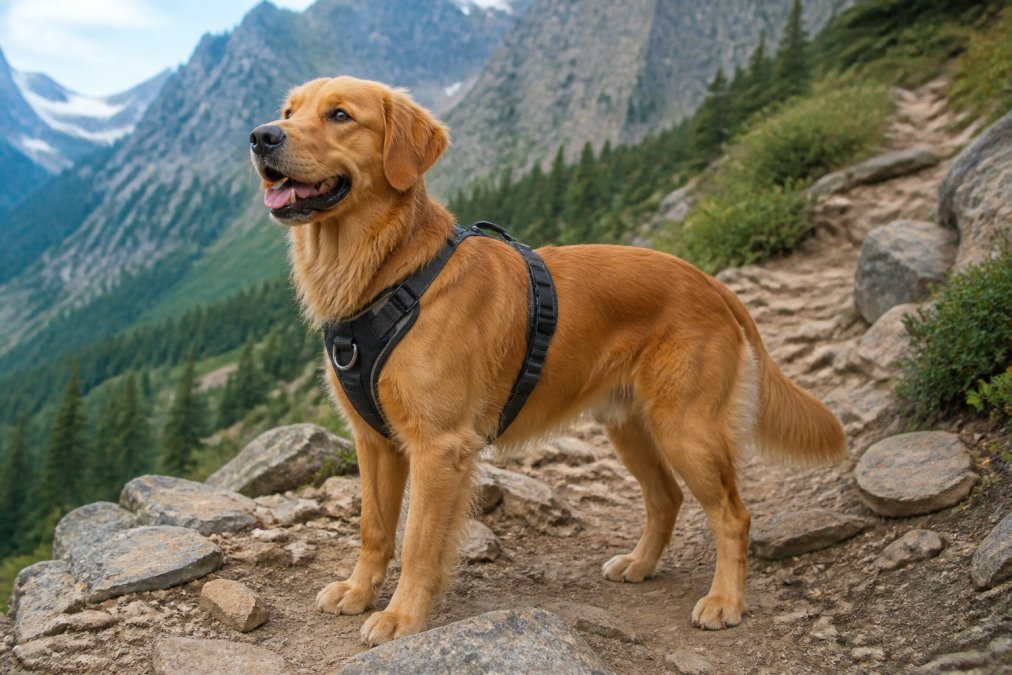
The terrain itself matters. On flat, predictable ground, a collar works if your dog doesn't pull. On steep descents, rocky sections, or narrow trails where footing is uncertain, a harness provides stability and control you simply can't get from a collar. Your dog's confidence and experience on trails also plays a role, inexperienced hikers benefit from the extra control a harness provides.
Best Dog Hiking Harness for Safety: Features That Matter
Not all harnesses are equal. A proper hiking harness needs specific features to actually protect your dog and give you the control you need on the trail.
Look for harnesses with breathable mesh lining and padding in high-contact areas. Your dog will wear this for hours, and chafing leads to sore spots that can ruin future hikes. The Truelove No Pull Harness uses CORDURA® 305D fabric with breathable mesh lining, which handles active dogs and rough terrain without restricting movement.

Reflective material is non-negotiable. Trails aren't always well-lit, and visibility matters for safety. 3M reflective webbing ensures your dog is visible to you and to others, especially during dawn or dusk hiking. Many quality harnesses also include LED light attachment points, which adds another layer of safety.
The attachment points matter more than most people realize. A harness should have at least two D-rings, one on the back for casual walking and one on the front for pulling control. Some hiking-specific harnesses add a handle on top, which is genuinely useful for assisting your dog over obstacles or during water crossings.
Fit is everything. A harness that's too loose allows escape; too tight restricts breathing and movement. Four-point adjustability (neck and chest straps) lets you dial in a custom fit that stays secure. The Truelove Pet Reflective Nylon Dog Harness includes four-point neck and chest adjustments with lightweight aluminum fittings that make on-and-off simple.
Quick-release buckles save time and frustration. You want to get your dog geared up quickly before hitting the trail, not wrestling with complicated closures. Duraflex buckles with quick-release design are the standard for quality harnesses.
How to Prevent Your Dog From Slipping Out of a Harness
An escape artist dog defeats the entire purpose of a harness. A dog slipping out mid-hike is a nightmare scenario, especially on a busy trail or near water.
Start with proper measurement. Measure your dog's chest circumference at the widest point, then add two fingers' width for comfort. A harness that's too large allows slipping; too small restricts breathing.
Dog Hiking Gear Checklist: Beyond the Harness or Collar
A harness or collar is just the foundation. Real hiking safety requires additional gear that works together with your primary restraint system.
| Gear Item | Purpose | Why It Matters |
|---|---|---|
| Harness | Primary restraint | Distributes pressure safely |
| Leash | Connection and control | Prevents separation on trail |
| Collar with ID | Backup identification | Safety if harness fails |
| Traffic Handle | Emergency control | Quick response to hazards |
| Reflective Material | Visibility | Safety during low light |
| Padding | Comfort | Prevents chafing on long hikes |
Frequently Asked Questions
Are harnesses safer than collars for hiking with dogs?
Yes, harnesses distribute leash pressure across your dog's entire body rather than concentrating it on the neck and cervical spine. This reduces the risk of tracheal collapse, neck injuries, and choking hazards, especially important on rugged terrain where sudden movements are common. Harnesses also provide better control on steep inclines and offer attachment points for emergency extraction if your dog gets stuck.
What is the best dog hiking harness for safety?
Look for a harness with a front-clip attachment for pulling control, multiple adjustment points for secure fit, breathable mesh lining, and reflective material for visibility. The Truelove No Pull Harness ($46.99) features 4-point adjustability, breathable CORDURA fabric, and a traffic handle for extra control on technical terrain. Ensure the harness distributes pressure evenly across the chest and belly to prevent escape and chafing.
Can a dog slip out of a harness on a hike?
Yes, if the harness doesn't fit properly or lacks secure attachment points. Escape artist dogs can slip out of loose or poorly designed harnesses. To prevent this, measure your dog's chest circumference accurately, use a harness with multiple adjustment straps, ensure the fit is snug but not restrictive, and check that all buckles are fastened. A front-clip harness also discourages lunging and reduces the leverage dogs use to escape.
Should my dog wear both a collar and harness while hiking?
Many experienced hikers recommend wearing both: the harness for control and pressure distribution during walking, and the collar for ID tags and emergency identification. If using both, attach the leash to the harness for hiking and keep the collar loose enough to fit two fingers underneath. Never attach the leash to both simultaneously, as this can create conflicting pressure and confuse your dog's sense of direction on the trail.