

Dog Travel Backpack vs Carrier for Hiking
Table of Contents
- Dog Backpack vs Carrier: Key Differences
- Weight Capacity and Dog Size Requirements
- Dog Hiking Safety Tips and Harness Selection
- Comfort, Ergonomics, and Weight Distribution
- How to Train a Dog to Ride in a Backpack
- Best Dog Apparel for Winter Walks and Trail Conditions
- Making Your Choice: Backpack or Carrier
- Frequently Asked Questions
Last Updated: October 1, 2026
Dog Backpack vs Carrier: Key Differences
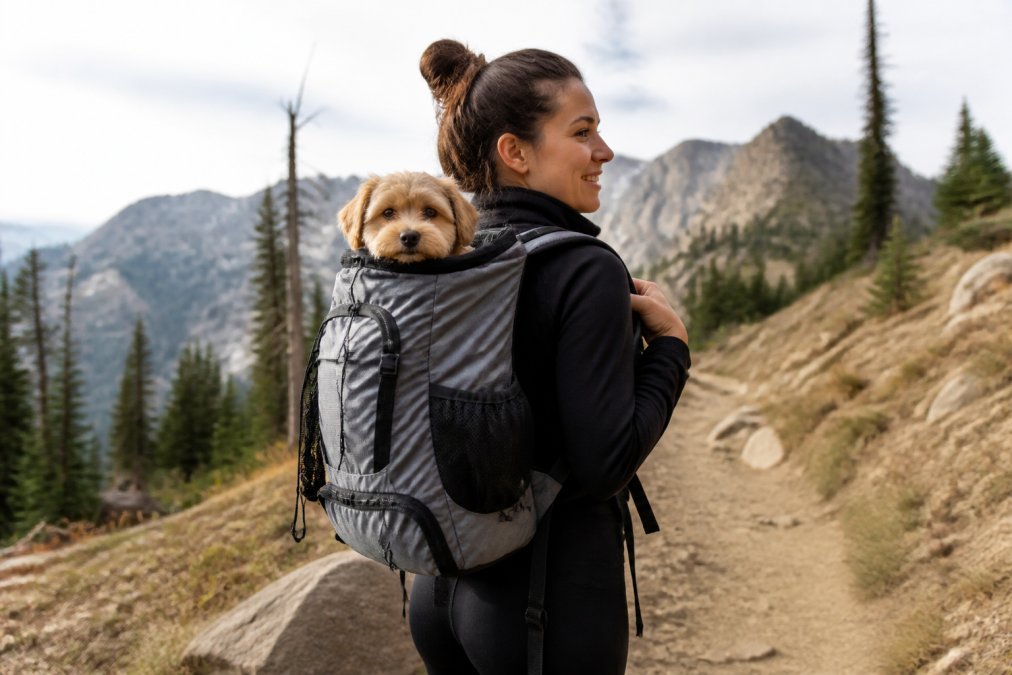
The choice between a dog travel backpack vs carrier for hiking fundamentally changes how the journey feels for both of you. A backpack lets your dog walk alongside you while carrying their own gear, building endurance and independence. A carrier keeps your dog secured close to your body, which works better for smaller dogs, injured pets, or steep terrain where you need both hands free.
Backpacks shift load onto your dog's shoulders and back, requiring a properly fitted harness and sufficient strength. Carriers distribute weight across your torso and shoulders, making them ergonomically gentler on your spine while keeping your dog secure.
Weight Capacity and Dog Size Requirements
Your dog's weight and breed anatomy are critical constraints. Backpacks typically max out around 25-35 pounds of gear capacity; carriers handle dogs up to about 25-30 pounds.
Weight-Based Guidelines
Small breeds under 15 pounds do better in a carrier due to shorter legs and lower stamina. Medium breeds (25-50 pounds) are ideal for backpacks, they're strong enough to handle the load and enjoy the independence. Large dogs over 50 pounds don't need a backpack; carrying them in a carrier would strain your back and shoulders.
Breed-Specific Anatomy
Breed structure, spine length and chest depth, determines how weight distributes across your dog's body and carrier fit.
Long-Backed Breeds (dachshunds, corgis, basset hounds, beagles) are vulnerable to intervertebral disc disease (IVDD). A poorly fitted backpack can pressure the lumbar spine. A carrier is safer for these breeds, keeping the spine neutral. If using a backpack, choose one with a rigid frame that prevents sagging and distributes weight evenly across shoulders and hips.
Deep-Chested Breeds (bulldogs, boxers, German shepherds, golden retrievers) can struggle in standard carriers that compress the chest cavity. Choose carriers with vertical depth rather than horizontal width. Backpacks work better for these breeds since they don't compress the ribcage.
Compact, Square-Bodied Breeds (pugs, French bulldogs, Boston terriers, Shih Tzus) fit standard carriers well but are prone to overheating. Carriers must have mesh panels on all sides for ventilation. Avoid backpacks for these breeds as they trap heat.
Tall, Lean Breeds (greyhounds, whippets, vizslas) do better in backpacks or oversized carriers with extra vertical clearance to prevent cramped leg positioning.
Before buying, measure your dog's spine length (skull base to tail base divided by leg length, if greater than 1.3, your dog is long-backed), chest depth (shoulder blade to ribcage, if more than 60% of shoulder height, your dog is deep-chested), and compare overall dimensions to carrier interior. Your dog needs at least 2 inches of clearance on all sides.
Dog Hiking Safety Tips and Harness Selection
Safety harnesses are non-negotiable for both options, but they work differently. For backpack use, you need a proper no-pull harness that distributes pressure across the chest and belly, not the neck. The American Veterinary Medical Association emphasizes that neck pressure during hiking can restrict airflow and cause strain on the trachea, especially in dogs prone to breathing issues.
The Truelove No Pull Dog Harness ($46.99) features breathable mesh lining, padded chest and belly support, 4-point adjustable system, reflective webbing, and quick-release buckle for on-the-fly adjustments.

For carriers, a safety tether inside the pack prevents jumping out mid-hike. Many carriers include harness attachment points for extra security on steep terrain or near water. Training takes 2-3 weeks: start indoors with short periods and treats, then gradually increase duration.
Comfort, Ergonomics, and Weight Distribution
Human Spinal Health and Load Mechanics
Carrying 20-30 pounds over 5+ miles creates cumulative strain. When weight pulls forward or to one side, your body compensates by arching your lower back, increasing lumbar disc pressure by up to 40%.
Plush Dog Bed Sofa Thickened Super Soft →
A well-designed carrier distributes weight across hips and torso via a waist belt that transfers load to your pelvis and core. Look for padded hip belts at least 2-3 inches wide and shoulder straps angled backward to prevent forward lean and lower back pain.
The Truelove harnesses feature soft sponge padding to reduce point-load stress and a chest strap that keeps weight centered. Carriers should sit high on your back, not extending more than 4 inches below your waist, to prevent downward center-of-gravity shift.
Preventing Cumulative Injury
Damage comes from repetition, not single outings. A 2022 survey found 34% of regular dog hikers reported lower back pain or shoulder strain within two years. Risk increases if carrying more than 25% of body weight or hiking more than twice weekly without proper load distribution.
Poor posture while wearing a carrier reduces stability on technical terrain and increases fall risk. A carrier with a rigid frame or structured back panel forces good posture and makes you a safer hiker.
Dog-Specific Load Distribution
A backpack must have padded shoulder straps and centered chest strap. Poor fit signs include limping, refusal to move, or constant shaking. Mesh lining prevents heat buildup and overheating on longer hikes, reducing core temperature by 3-5 degrees compared to solid nylon.
Test weight distribution before committing: wear the carrier with a 20-pound weight for 10-15 minutes on flat ground. If you feel strain in your lower back or shoulders, that carrier will cause injury on a full hike. The right carrier should feel like weight sits on your hips, not your spine.
How to Train a Dog to Ride in a Backpack
Start indoors with the empty backpack or carrier, letting your dog sniff and explore while rewarding calm behavior. Place the empty pack on your dog for 30 seconds, gradually increasing to 2-3 minutes over several days. Once your dog accepts the empty pack, add minimal weight (single water bottle) and take short walks, watching for limping, excessive panting, or reluctance. Increase weight and distance slowly over 4-6 weeks.
| Week | Activity | Duration | Location |
|---|---|---|---|
| 1 | Wear empty pack indoors | 5-10 minutes | Home |
| 2 | Wear empty pack on short walk | 15-20 minutes | Neighborhood |
| 3 | Wear light pack (2-3 lbs) | 20-30 minutes | Local park |
| 4 | Wear moderate pack (5-8 lbs) | 30-45 minutes | Longer trail |
| 5+ | Wear full pack on varied terrain | 1-2 hours | Real hiking trail |
Never force a dog into a carrier. Instead, create positive associations.
Best Dog Apparel for Winter Walks and Trail Conditions
Weather changes everything about gear selection. Winter hikes demand insulation and protection from wet conditions. A dog's paw pads are vulnerable to ice, salt, and frozen terrain. Consider booties or paw wax to protect sensitive skin.
Making Your Choice: Backpack or Carrier
Choose a backpack when your dog weighs 25-50 pounds, is in good physical condition, and you're hiking moderate terrain where they can walk independently. Backpacks build your dog's endurance and give them the satisfaction of self-sufficiency. They're ideal for dogs that enjoy working and for owners who want to minimize their own load.
Frequently Asked Questions
Can I use a dog backpack for hiking with a medium-sized dog?
Yes, but it depends on your dog's weight and the backpack's capacity. Most dog backpacks accommodate dogs up to 15-25 pounds, though some larger styles handle up to 40 pounds. For medium dogs (25-50 pounds), a front-carry harness or hands-free leash system may be more practical than a backpack. Always check the manufacturer's weight limit and ensure your dog is comfortable with the carrier before hitting the trail. Start with short distances to build tolerance.
What safety features should I look for in a dog hiking carrier?
Prioritize harnesses with padded shoulder straps, a secure waist belt, and quick-release buckles for emergency access. Look for reflective materials or LED attachment points for visibility on shadowy trails. A sternum strap helps distribute weight evenly across your shoulders and prevents the carrier from shifting. Breathable mesh lining keeps your dog cool, while safety tethers inside the carrier prevent escape. Ensure the harness has multiple adjustment points so you can customize the fit for your dog's anatomy and your comfort.
Are dog backpack carriers good for dogs with joint problems or aging dogs?
Backpacks can actually support aging or injured dogs by reducing stress on their joints during long hikes. The padded, elevated position takes weight off their legs and distributes pressure evenly. However, ensure the backpack has adequate padding and that your dog is not overheated. For very elderly dogs or those with severe mobility issues, a hands-free leash system or shorter trail distances may be safer. Always consult your veterinarian before using a backpack with a dog that has joint concerns or other health conditions.
How do dog backpacks and carriers affect my posture and back health?
Proper ergonomic design is critical for your spine and shoulders. A well-fitted backpack with padded straps, a sternum strap, and a supportive waist belt distributes your dog's weight evenly across your torso rather than concentrating it on your shoulders. This reduces strain on your neck and lower back. Carriers without adequate padding or lumbar support can lead to muscle fatigue and posture problems over time. Look for carriers with adjustable straps so you can find the right fit for your body. If you experience pain during or after use, the carrier may not be right for your frame.
What's the difference between a dog backpack and a hands-free leash system?
A dog backpack carries your dog on your body, keeping them elevated and secure, ideal for small dogs or when you need both hands free for climbing or balance. A hands-free leash (like a waist or crossbody leash) keeps your dog on the ground beside you while securing the leash to your body, giving you freedom of movement. Backpacks work best for dogs under 25 pounds; hands-free leashes suit medium to large dogs that walk independently. Choose based on your dog's size, the trail difficulty, and whether your dog prefers to walk or be carried.