

Durable Cat Scratching Posts: A 2026 Guide
Table of Contents
- Why Durable Cat Scratching Posts Matter for Your Home
- Sisal vs. Carpet Scratching Posts: Which Lasts Longer
- Tall Cat Scratching Posts for Large Cats: Height and Support
- Cat Scratching Post Stability Tips: Preventing Tipping and Wobble
- Materials That Stand the Test: Natural Sisal and Durable Weaves
- Recognizing When Your Scratching Post Needs Replacement
- Top Durable Scratching Posts for Every Budget and Space
- Conclusion
- Frequently Asked Questions
Last Updated: October 2, 2026
Why Durable Cat Scratching Posts Matter for Your Home
Cats need to scratch, it's a biological necessity that maintains healthy claws, marks territory, and stretches muscles. Without proper outlets, your furniture becomes the target. That's where durable cat scratching posts enter the picture.
A durable cat scratching post channels your cat's natural instincts into a dedicated space, reduces stress-related behaviors, and provides essential physical activity. The right scratching solution transforms both cat behavior and home dynamics.
The challenge is finding a post that actually lasts. Cheap materials shred, bases wobble, and sisal rope unravels. A quality scratching post withstands aggressive scratching, resists wear over years of daily use, and remains stable enough for safe climbing and playing.
This guide covers material choices, stability requirements, height considerations, and specific products that deliver durability.
Sisal vs. Carpet Scratching Posts: Which Lasts Longer
The material you choose determines how long your scratching post survives. Sisal rope and carpet are the two dominant options, and they perform very differently.
Sisal rope is the gold standard for durability. This natural fiber from agave plants creates a texture cats find irresistible and doesn't flatten like carpet. After months of scratching, a sisal post maintains its texture and appeal because it still feels right under their claws.
Sisal posts resist shredding better than carpet. When carpet wears, it unravels in loose threads that are messy and unsafe. Sisal frays in a controlled way and absorbs more abuse before requiring replacement.
Carpet-wrapped posts deteriorate faster. Carpet compacts under repeated scratching, losing texture within weeks and causing cats to lose interest. Carpet also sheds fibers constantly, creating cleanup work and potential choking hazards.
A high-quality sisal post lasts 2-3 years with heavy use; a carpet post typically needs replacement within 6-12 months. Sisal wins decisively on longevity and cost-per-year.
Tall Cat Scratching Posts for Large Cats: Height and Support
Large cats like Maine Coons and Ragdolls need more vertical space. A standard 30-inch post feels cramped for a 15-20 pound cat and prevents full spine stretching.
For large cats, aim for posts at least 60 inches tall to allow full spine stretching. Taller options (70-80 inches) provide multiple vertical zones.
Support matters equally. A tall post for a heavy cat needs a base at least 20 inches across in both directions, made from solid wood or reinforced particle board, not hollow plastic.
The Large Cat Tree for Big Cats Robust Cat Tower with Several Levels reaches 67 inches and supports cats up to 30 pounds with a 220-pound total weight capacity. The 4.3-inch thick sisal posts and reinforced double-layered base keep the structure rock-solid even during aggressive play.

Cat Scratching Post Stability Tips: Preventing Tipping and Wobble
A wobbly post is dangerous. Cats lose confidence in unstable structures and stop using them, and a tipping post can injure your cat or damage furniture.
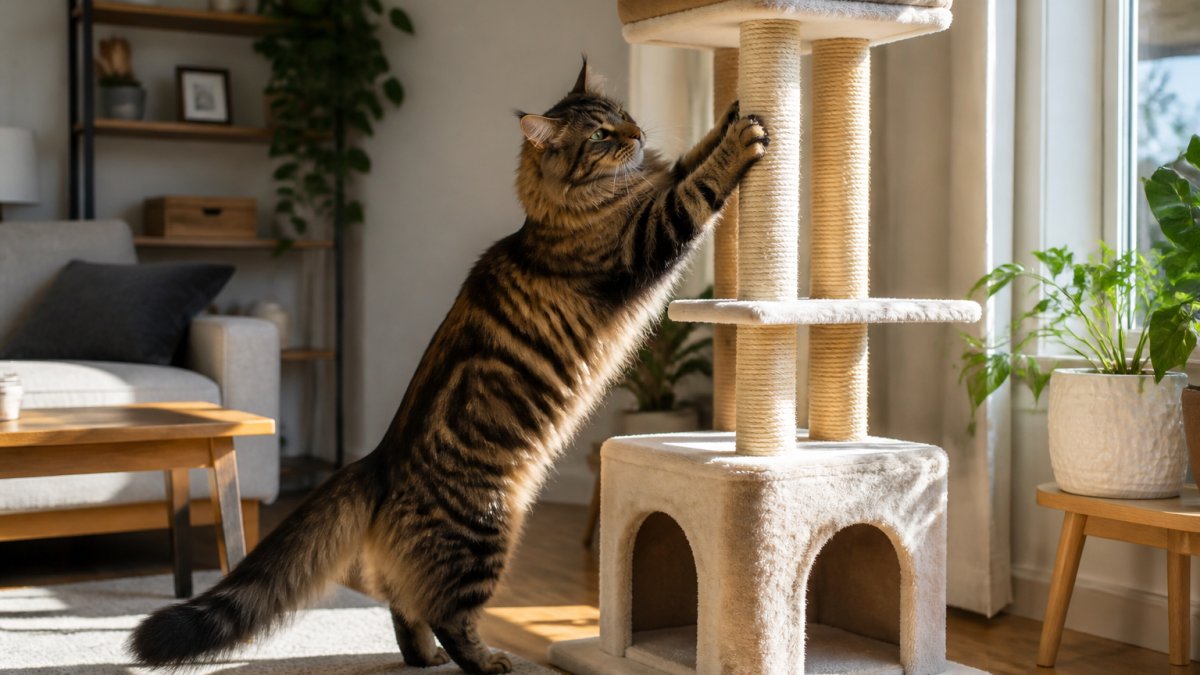
Base weight is critical. The base should weigh at least 15-20 pounds for a standard post, more for tall structures. Solid wood or reinforced particle board provides the necessary mass to prevent tipping.
Post thickness affects movement during use. Posts under 3 inches flex noticeably; thicker posts (4-5 inches) remain rigid and make cats feel secure.
Wall anchoring is the final safety layer. Anti-tip straps or brackets secure to the wall with screws and are essential for tall posts or multi-level structures, preventing tipping during vigorous play.
Test stability before use by applying firm downward pressure to the top platform. If you feel flex or wobble, add wall anchoring immediately.
Materials That Stand the Test: Natural Sisal and Durable Weaves
Natural sisal rope wrapped tightly around wooden posts is the industry standard. The rope should be wound densely with no gaps where wood shows through.
Woven sisal construction, where fibers are interlocked rather than glued, outperforms standard rope wrapping by distributing stress across multiple fibers. Commercial cat facilities use woven sisal almost exclusively.
Wood construction matters. Solid hardwood lasts longer than particle board, but quality reinforced particle board works well. Avoid hollow posts or thin plywood.
Plush fabric on platforms should be high-density material that resists pilling and shedding.
The Wooden Cat Tower with Double Condos Spacious Perch Fully Wrapped Scratching Sisal Posts from Paws N Whiskers Co. uses natural sisal throughout, with replaceable components when wear eventually occurs. This design extends the post's lifespan significantly compared to non-replaceable alternatives.

Recognizing When Your Scratching Post Needs Replacement
Visible sisal damage is the clearest indicator. If more than 20% of the sisal surface is frayed, shredded, or missing, replacement is due. Once sisal reaches this point, cats lose interest quickly because the texture no longer satisfies their scratching instinct.
Wobbling or instability means the base or internal structure has failed. This is a safety issue. Don't wait for your cat to get injured.
Odor buildup happens when moisture and cat urine accumulate in the material. If cleaning doesn't remove the smell, the post has absorbed too much and needs replacement.
Cat Tree Floor to Ceiling Cat Tower Adjustable Height with Cat Condo Cozy →
Cats avoiding the post is the most telling sign. If your cat suddenly prefers furniture or other surfaces, the post has likely degraded enough that it no longer appeals to them.
Some quality posts feature replaceable components. Instead of replacing the entire structure, you can swap out worn sisal wrapping or damaged platforms. This extends the post's useful life significantly and reduces waste.
Top Durable Scratching Posts for Every Budget and Space
Best for Large Cats: Large Cat Tree for Big Cats Strong Cat Tower ($156.99)
This post is engineered for cats weighing 20-30 pounds.
Stability is uncompromising. Wall anchoring straps are included for additional security.
Best Value: Wooden Cat Tower with Double Condos ($73.99)
At 35 inches tall, this post suits average-sized cats and fits smaller living spaces.
This post is ideal for single cats or small households where space is limited.
Best for Multi-Cat Households: Large Cat Tree Tall Cat Tower ($89.99)
Standing 70.9 inches tall, this post accommodates 4-6 small to medium-sized cats simultaneously.
The natural sisal construction is 100% coverage, meaning no exposed wood.
This post excels at preventing territorial disputes by offering multiple resting and scratching zones.
Best Space-Saving: Cat Tree 5-Tier Floor to Ceiling Cat Tower Cactus ($60.99)
This post is perfect for apartments or rooms where floor space is premium.
Best for Senior Cats: 110cm Modern Cat Furniture Climbing Tree ($149.99)
Best for Energetic Cats: Height Adjustable Wooden Cat Tree with Large Hammock ($123.99)
This floor-to-ceiling post adjusts from 93.3 to 100.8 inches, fitting various room heights.
The large hammock and spacious condo provide rest zones after active play.
| Model | Height | Best For | Price | Key Feature |
|---|---|---|---|---|
| Large Cat Tree for Big Cats | 67" | Large breeds 20-30 lbs | $156.99 | 4.3" thick sisal posts |
| Wooden Cat Tower Double Condos | 35" | Single cats, small spaces | $73.99 | Replaceable components |
| Large Cat Tree Tall Cat Tower | 70.9" | Multi-cat households | $89.99 | 6 scratching posts |
| Floor to Ceiling Cactus Tower | 94-108" | Space-saving needs | $60.99 | Adjustable height |
| Modern Cat Furniture 110cm | 43.7" | Senior cats | $149.99 | Moderate height |
| Height Adjustable Wooden Tree | 93.3-100.8" | Energetic cats | $123.99 | Tri-column stability |
Conclusion
A durable cat scratching post isn't a luxury, it's a necessity for cat owners who want to protect furniture while supporting their cat's health. The posts that last combine natural sisal wrapping, sturdy wooden construction, heavy bases, and thoughtful design.
Paws N Whiskers Co. offers a curated selection of high-quality pet products designed to treat your furry family members with the care they deserve. Our selection includes options for every budget and space, from compact designs for apartments to strong towers for large, multi-cat households. Each post features the durable materials and stability that keep cats engaged and your furniture safe.
Frequently Asked Questions
What makes a durable cat scratching post last longer than cheaper options?
Durable cat scratching posts use natural sisal rope, thick wooden posts (typically 3.5 to 4.3 inches in diameter), and reinforced bases that prevent wobbling. These materials withstand repeated scratching without fraying or collapsing. Natural sisal is more resilient than carpet or cardboard, maintaining its texture and structural integrity even after months of daily use. A heavier base and sturdy construction also mean the post stays stable, reducing wear from movement.
How tall should a durable scratching post be for large cats?
Large cats like Maine Coons and Ragdolls need scratching posts at least 60 to 72 inches tall. This height allows them to stretch their full body length while scratching, which satisfies their natural instinct and promotes healthy claw maintenance. Floor-to-ceiling models adjustable between 90 and 100 inches are ideal for multi-cat homes and provide vertical space for climbing and surveying their territory.
Is sisal rope better than carpet for a scratching post?
Yes, sisal rope is superior for durability. Natural sisal is tightly woven and resists shredding longer than carpet fibers, which flatten and fray under repeated scratching. Sisal also appeals more to cats' natural instincts, encouraging them to scratch the post instead of furniture. Carpet-covered posts are softer but wear out faster, requiring replacement within months for heavy scratchers.
What's the best way to prevent a cat scratching post from tipping over?
Choose a post with a wide, heavy base (at least 20 by 18 inches) and solid particle board construction. Tri-column designs with multiple support posts offer superior stability. Use wall-anchoring straps or anti-tip kits included with quality models, securing them to the wall with expansion bolts. Place the post in a corner or against a wall for added support. Base weight of at least 15 to 24 pounds helps prevent wobbling during vigorous play.
Invest in a scratching post that will last. Explore Paws N Whiskers Co.'s full range of durable cat scratching posts and find the perfect fit for your home. Get started today and give your cat the outlet they need.