

Are Expensive Pet Toys Worth It? A Value Analysis
Table of Contents
- Quick Comparison: Premium vs Budget Pet Toys
- Durability vs Price: What Actually Lasts Longer
- Safe Materials for Pet Toys: Why Material Matters
- Durable Chew Toys for Aggressive Dogs: The Investment Case
- Mental Enrichment Toys for Pets: Behavior and Longevity Benefits
- Cost-Per-Use Calculation: The Real Value Equation
- DIY Alternatives vs Premium Toys: When Expensive Toys Win
- Frequently Asked Questions
Last Updated: September 30, 2026
Quick Comparison: Premium vs Budget Pet Toys
When you're standing in the pet supply aisle, the price gap between a $5 toy and a $20 toy can feel absurd. But here's what matters: expensive pet toys worth the investment depends entirely on what your pet actually does with them. Some dogs destroy everything in minutes. Others ignore toys altogether. The real question isn't whether premium costs more, it's whether it delivers value relative to how long it lasts and what your pet gets from it.
Many pet owners face this exact decision and have to figure out what works, what fails, and where the real value sits. The toys that survive longest aren't always the most expensive ones. The toys that keep pets engaged longest aren't always the flashiest ones either.
Here's a comparison of how premium and budget options stack up across the factors that actually matter:
| Factor | Budget Toys | Premium Toys | Winner |
|---|---|---|---|
| Initial Cost | $5-$10 | $13-$27 | Budget |
| Typical Lifespan | 1-3 weeks | 2-6 months | Premium |
| Material Safety | Variable | Tested, non-toxic | Premium |
| Enrichment Value | Basic | High (mental stimulation) | Premium |
| Cost Per Week | $1.67-$5 | $0.65-$1.35 | Premium |
| Best For | Occasional chewers | Aggressive chewers, daily use | Varies |
The cost-per-week metric is where the picture changes. A $26.99 toy that lasts six months beats a $5 toy that lasts three weeks, even though the upfront price feels steep.
Durability vs Price: What Actually Lasts Longer
Expensive pet toys worth buying comes down to one fundamental question: does the material actually resist wear and tear better than cheap alternatives?
The answer is yes, but with nuance. Premium toys use materials engineered for longevity. Budget toys use materials engineered for cost. A rubber toy rated for aggressive chewing will survive longer than a thin plastic one, that's physics, not marketing.
Material matters more than brand name. EVA foam and natural rubber resist punctures and tears that would shred cheaper synthetic fibers in days. The Dogs Eva Biting Stick from Paws N Whiskers Co. ($12.99) uses rubber construction specifically designed for bite-resistant performance. Dogs working on it for weeks see minimal wear. Compare that to thin plastic toys that crack after a few sessions.

Longevity also depends on how a toy is designed. Seams matter. Reinforcement matters. A toy with weak stitching will fail at the seams first, regardless of material quality. Premium toys invest in construction details that budget toys skip.
Here's the practical reality: a dog that destroys toys in days will burn through budget toys faster than you can replace them. The replacement cycle becomes expensive quickly. A destructive chewer working on a durable toy might keep the same toy for months. The math shifts dramatically in premium's favor.
Safe Materials for Pet Toys: Why Material Matters
Not all toy materials are created equal when it comes to safety, and the price difference often reflects the cost of rigorous testing that budget manufacturers skip entirely.
Premium pet toys undergo safety certification processes that add measurable cost to production. Materials used in expensive toys are typically tested against standards like ASTM F963-17 (Consumer Product Safety Commission guidelines for toy safety) and verified as non-toxic, BPA-free, and phthalate-free. These certifications require third-party laboratory testing, documentation, and compliance audits. A single material safety certification can cost manufacturers $2,000 to $5,000 per product line, which gets passed to consumers as a price premium.
Budget toys often skip this testing entirely. They may use recycled plastics, untested dyes, or adhesives not rated for pet ingestion. The material composition isn't documented because documentation costs money. When a budget toy breaks down, it can release microplastics, toxic dyes, or adhesive residue that poses real ingestion and choking hazards.
Specific material choices matter because they're engineered for different failure modes. Premium toys use food-grade silicone (the same material in baby bottle nipples) because it's inert, it doesn't degrade into harmful compounds when chewed. They use natural rubber or EVA foam because these materials tear cleanly rather than splintering into sharp fragments. The New Cat Interactive Ball Toy from Paws N Whiskers Co. ($19.99) is made from ABS and silicone, as listed in the product specifications.

Budget alternatives often use PVC (polyvinyl chloride) or low-grade polystyrene. These materials can leach phthalates or BPA when degraded by saliva and stomach acid. They also tend to crack rather than bend, creating sharp edges and small pieces that pose choking and blockage risks. A toy that breaks into fragments isn't just less durable, it becomes a medical emergency.
Material safety can also affect longevity. Some materials are more chemically stable over time and can resist degradation from saliva and repeated chewing better than others. Toys made from durable materials might show surface wear after extended use but remain structurally sound, whereas less durable toys can break down and release fragments sooner.
Dogs Eva Biting Stick No Rope Colors →
If your pet is a heavy chewer or tends to ingest toy fragments, material composition is especially important. Consult your veterinarian if you have concerns about ingestion risks or appropriate toy types for your pet.
Durable Chew Toys for Aggressive Dogs: The Investment Case
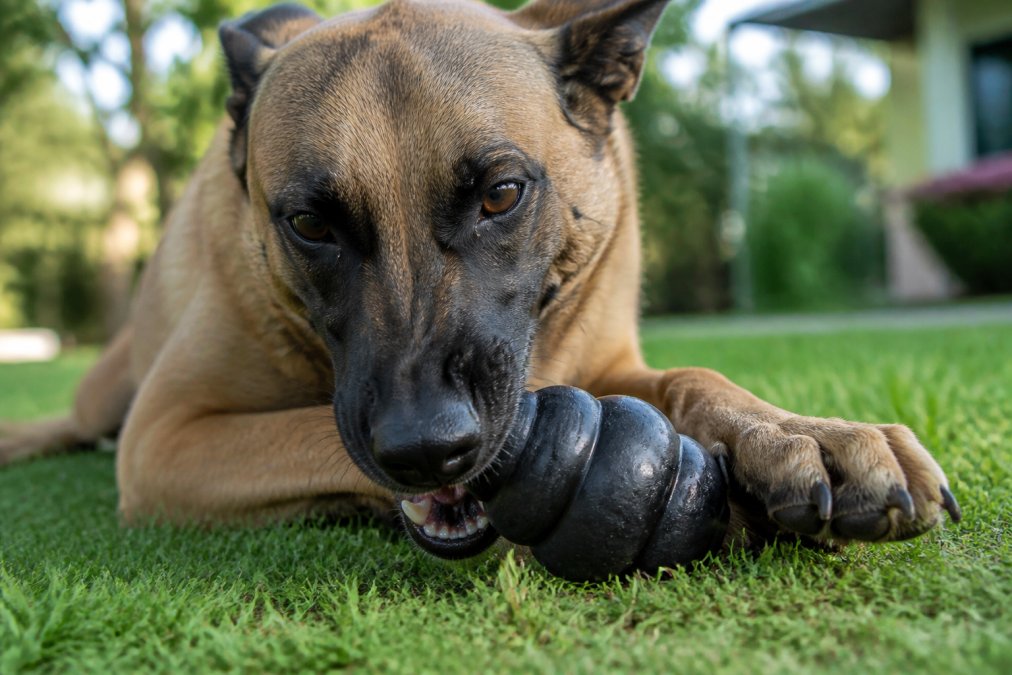
Aggressive chewers need toys that can handle serious jaw pressure without falling apart. This is where expensive pet toys worth the investment becomes obvious.
An aggressive chewer will destroy a budget toy in days. We're talking shredded plastic, torn fabric, pieces swallowed. Budget toys simply aren't engineered for that use case. Durable chew toys for aggressive dogs need materials that bend under pressure but don't snap or splinter.
The Eva Pet Supplies Dog Outdoor Training Stick from Paws N Whiskers Co. ($13.99) uses EVA foam material, and according to its description, bite marks can be reduced by scalding with high-temperature water. That's engineered durability, not accident.
For aggressive chewers, a more durable toy can reduce how often you replace toys and how much waste you generate over time.
Aggressive chewers also benefit from toys designed for their behavior. Premium toys often include features like reinforced edges or bite-resistant coatings that budget toys skip. These features directly extend lifespan for the dogs that need it most.
Mental Enrichment Toys for Pets: Behavior and Longevity Benefits
Expensive pet toys worth the price often include enrichment features that keep pets engaged longer. This matters for behavior and for the toy's actual lifespan.
A bored pet is a destructive pet. Pets that lack mental stimulation chew more aggressively, play more roughly, and destroy toys faster. Enrichment toys reduce boredom, which reduces destructive behavior, which extends toy lifespan.
The New Cat Interactive Ball Toy from Paws N Whiskers Co. ($19.99) includes intelligent modes that simulate prey movement. Cats engage with the toy longer because it's genuinely interesting.
Cost-Per-Use Calculation: The Real Value Equation
This is where the expensive pet toys worth buying question gets answered with math.
Here's how to calculate it for your situation:
- Estimate how long the toy will last (days)
- Divide the price by the number of days
- Compare cost-per-day across options
DIY Alternatives vs Premium Toys: When Expensive Toys Win
Some pet owners try to save money with DIY alternatives, cardboard boxes, old socks, paper bags, toilet paper tubes. These are free or nearly free. The question isn't whether they provide enrichment; it's whether they're safe for regular use and whether they're actually cheaper when you account for replacement cycles and environmental cost.
Frequently Asked Questions
Are expensive pet toys more durable for aggressive chewers?
Expensive toys often use higher-quality materials like reinforced rubber or EVA foam that resist punctures and tears better than budget alternatives. A durable chew toy for aggressive dogs is often designed with materials and construction that help it last significantly longer than many cheaper options. The actual durability depends on material quality and bite-resistance design rather than price alone, but premium toys generally offer better longevity for destructive chewers.
What safety standards should I look for in pet toys?
Look for toys made from non-toxic materials with no loose parts that pose ingestion risks. Pet toys should comply with safety standards for small parts and chemical composition. Check product listings for certifications confirming non-toxic materials and bite-resistant construction. Avoid toys with synthetic fibers that shed easily or small components dogs can swallow. Safe materials for pet toys include food-grade silicone, natural rubber, and EVA foam without harmful chemicals.
Do expensive toys provide better mental enrichment?
Mental enrichment toys for pets vary in effectiveness based on design rather than price. Interactive toys that respond to your pet's actions, like rolling balls or puzzle feeders, stimulate problem-solving and reduce boredom. Expensive interactive toys often include features like automatic activation, adjustable difficulty levels, or realistic prey simulation. However, even budget toys can provide enrichment if they encourage active play and engagement, so the toy type matters more than cost.
How can I tell if an expensive pet toy is worth the investment?
Calculate cost-per-use by dividing the toy's price by its expected lifespan in months. Consider your pet's chewing habits, the toy's material safety, and whether it provides mental stimulation or addresses destructive behavior. Premium toys often justify higher costs through durability and enrichment value, especially for aggressive chewers.