

How to Clean Luxury Dog Bed Covers Properly
Table of Contents
- Preparation and Pre-Treatment for Luxury Dog Bed Covers
- Stain Removal for Luxury Pet Furniture
- Selecting the Best Detergent for Pet Bedding
- Machine Washing Settings for Fabric Integrity
- How Often to Wash Dog Bed Covers
- Drying and Maintenance Schedule
- Sanitization and Deep Cleaning Between Washes
- Frequently Asked Questions
Last Updated: September 23, 2026
Preparation and Pre-Treatment for Luxury Dog Bed Covers
Proper preparation determines whether your clean luxury dog bed covers stay vibrant and soft or fade and shrink. Always start with the care tag.

Check the Care Tag and Fabric Content
Your fabric's care tag specifies water temperature, safe detergents, and whether machine washing is allowed. Some luxury covers require hand washing only; others handle a gentle machine cycle.
Different fabrics have different needs: cotton handles cold water well, microfiber needs gentle treatment to avoid pilling, and fleece requires low heat.
If the tag says hand wash, follow it, machine washing will destroy the fibers.
Vacuum and Remove Debris
Use your vacuum's upholstery attachment to remove loose dirt and pet hair, paying special attention to seams. A lint roller removes stubborn lint quickly. Removing debris protects your washing machine and helps detergent reach stains more effectively.
Stain Removal for Luxury Pet Furniture
Fresh stains respond best to quick action; set-in stains need different treatment. Both can be treated without harsh bleach.
Spot Cleaning Fresh Stains
Blot immediately with a clean white cloth, don't rub, as rubbing pushes the stain deeper into fibers.
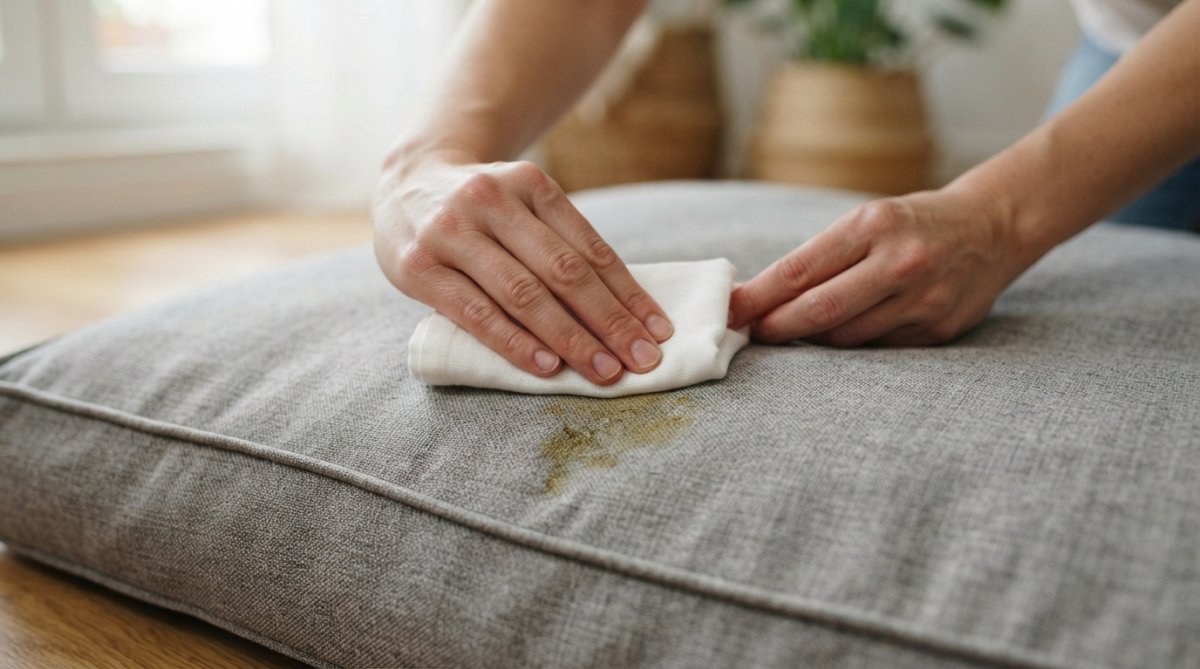
For organic stains, use cold water first, hot water sets protein-based stains permanently. Blot repeatedly until clean. Then apply a mild solution (one tablespoon mild dish soap in one cup cold water), dab onto the stain, and blot with a clean, damp cloth to remove soap residue.
Treating Set-In Stains Without Bleach
Skip bleach entirely, it damages luxury fabrics. Instead, use enzyme cleaners designed for pet stains. Apply directly to the stain, let sit for 15 minutes, then blot thoroughly with a damp cloth and rinse. Repeat for stubborn stains; multiple gentle treatments work better than one aggressive attempt.
Selecting the Best Detergent for Pet Bedding
Luxury dog bed covers require detergent that balances cleaning power with fabric preservation, depending on your cover's material.

Mild and Hypoallergenic Options
Choose a gentle, hypoallergenic detergent labeled "free and clear." Avoid fabric softeners and scented detergents. Use liquid detergents, which dissolve completely in cold water; powders leave residue on velvet or faux fur. Use only a quarter cup per load, excess detergent leaves residue that dulls microfiber and causes pilling on fleece.
Detergent Selection by Luxury Fabric Type
Different luxury materials require different detergent approaches:
Velvet and Faux Fur Covers: Use a wool-safe or delicate-fabric detergent with lower pH and gentler surfactants. Avoid enzyme-heavy formulas, which can break down pile structure. A mild, plant-based detergent preserves soft texture.
Microfiber Covers: Choose a detergent specifically formulated for microfiber or a gentle, low-sudsing formula. Avoid optical brighteners, which leave a film.
Leather or Faux Leather Covers: Never machine wash with standard detergent. Spot clean genuine leather with leather-specific cleaner. Hand wash faux leather in cool water with minimal mild detergent, then dry flat immediately to prevent cracking.
Cotton and Cotton-Blend Covers: Luxury cotton blends benefit from detergent that protects color and reduces fading. Avoid bleach-based or oxygen-based cleaners.
Enzyme Cleaners: When and How to Use Them
Enzyme cleaners break down urine, sweat, and organic compounds that create odors. For machine washing, add an enzyme cleaner to your wash cycle for extra odor control, especially if your dog has accidents on the bed.
Important caveat: Enzymes can weaken delicate fibers if left to sit too long. On velvet or faux fur, use enzyme cleaners only during the wash cycle itself, not as a pre-soak. For microfiber, limit enzyme exposure to 30 minutes maximum. On leather or faux leather, avoid enzymes entirely, use leather-specific or pH-neutral cleaners instead.
For non-removable covers or spot cleaning, enzyme sprays designed for pet bedding are safer than adding enzymes to a full wash. Spray lightly on the affected area, let it sit for the time recommended on the product label (typically 10-15 minutes), then blot thoroughly. This gives enzymes time to work without prolonged contact that could damage fibers.
Machine Washing Settings for Fabric Integrity
Machine washing is convenient, but wrong settings destroy luxury fabrics. Use these settings to protect your investment.
Gentle Cycle and Cold Water Washing
Always use the gentle or delicate cycle. This setting uses less agitation and shorter spin times. Your luxury cover survives the wash intact.
Dog Bed Extra Large Orthopedic Pet →
Cold water is your friend. Hot water shrinks fabrics and fades colors. Warm water isn't necessary for pet bedding, cold water cleans effectively and protects fibers.
Never overload the washing machine. Your cover needs room to move freely. Cramming too many items causes uneven washing and excess agitation.
Handling Removable and Non-Removable Covers
Removable covers are easier to care for. Unzip them from the bed and wash separately. This protects the foam or filling underneath.
For non-removable covers, hand washing is often safer. Fill a bathtub with cold water and mild detergent. Submerge the cover and gently agitate for a few minutes. Rinse thoroughly with clean water.
If you must machine wash a non-removable cover, use the gentle cycle with cold water. Place it in a mesh laundry bag for extra protection. This prevents excessive agitation and tangling.

| Washing Method | Best For | Temperature | Cycle |
|---|---|---|---|
| Machine gentle cycle | Removable covers | Cold water | Delicate |
| Hand wash | Non-removable covers | Cold water | Gentle agitation |
| Machine with mesh bag | Delicate fabrics | Cold water | Gentle |
How Often to Wash Dog Bed Covers
Washing frequency depends on your dog and the bed's use. A dog that spends all day on the bed needs more frequent washing than one that uses it occasionally.
Wash removable covers every two to four weeks. This schedule maintains freshness without excessive wear. If your dog has accidents or spends most of the day on the bed, wash every two weeks.
For non-removable covers, spot clean weekly and do a full hand wash every four to six weeks. Spot cleaning extends the time between full washes and keeps the bed fresher longer.
Dogs with skin conditions or those prone to odor issues need more frequent washing. Watch for signs that your dog's bed needs attention. A musty smell means it's time to wash, regardless of the schedule.
Drying and Maintenance Schedule
How you dry your cover matters as much as how you wash it. Wrong drying methods cause shrinkage, damage, and loss of the luxurious feel that justified the investment. Drying also varies significantly by fabric type.
Air Drying vs. Tumble Dry Low
Air drying is the safest option for luxury covers. Hang the cover on a clothesline or lay it flat on a clean surface. Air drying takes longer but prevents heat damage and color fading. For velvet and faux fur, air drying is essential, machine drying will permanently flatten the pile.
If you must use a dryer, select tumble dry low heat only. High heat shrinks fabrics and damages delicate fibers. Check the care tag first; some covers shouldn't go in the dryer at all. Remove the cover from the dryer while it's still slightly damp and finish drying it flat or hanging. This prevents wrinkles and allows even drying.
For microfiber covers: Air dry completely. If you use a dryer, use the lowest heat setting (below 130°F) for no more than 10 minutes, then air dry the rest of the way. Microfiber retains heat and can overheat in a standard dryer.
For faux leather or leather covers: Never machine dry. Air dry flat, away from direct heat sources or sunlight. Leather can crack and shrink if dried too quickly.
Preventing Color Fading and Shrinkage
Sunlight fades colors over time. Dry covers indoors or in shade when possible. If you hang them outside, position them away from direct sun. UV exposure is especially damaging to darker luxury fabrics, a faded navy velvet cover loses its appeal quickly.
Shrinkage happens when heat is too high or water is too hot. Cold water and low heat prevent this.
Restoration and Repair Between Washes
Luxury dog beds are investments, and proper maintenance extends their life significantly. Beyond washing, a few restoration techniques keep your cover looking and feeling new.
Sanitization and Deep Cleaning Between Washes
Regular washing keeps your dog's bed clean, but deep cleaning addresses hidden bacteria and odors.
Frequently Asked Questions
What is the best way to wash a dog bed cover?
Start by checking the care tag for specific fabric instructions. Vacuum the cover thoroughly, then pre-treat any stains with a pet-safe enzyme cleaner. Use the gentle cycle with cold water and a mild, hypoallergenic detergent. For removable covers, unzip them completely before washing. Air drying is safest for luxury fabrics, though tumble dry low works for more durable materials. Always avoid bleach, as it can damage fibers and harm your pet.
How often should I wash my dog's bed cover?
Wash removable covers every 2-3 weeks for regular maintenance, or weekly if your dog spends significant time outdoors or has skin sensitivities. Increase frequency during shedding season or if accidents occur. Non-removable covers benefit from monthly spot cleaning and quarterly deep cleaning. For beds with a waterproof liner, this feature protects the foam base, so focus your washing schedule on the outer cover to maintain fabric integrity.
What is the best detergent to use for washing dog bedding?
Choose mild, hypoallergenic detergents free of dyes and perfumes, which can irritate sensitive pet skin. Enzyme cleaners are excellent for odor neutralization and breaking down organic stains without harsh chemicals. Avoid fabric softeners, bleach, and heavy fragrances. Look for pet-safe formulas that are gentle on luxury fabrics like coral fleece and plush materials. Enzyme-based options work especially well for removing urine odors and pet-related stains while preserving the softness of premium covers.
Can I use bleach on luxury dog bed covers?
No, avoid bleach entirely on luxury dog bed covers. Bleach damages delicate fibers, causes color fading, and leaves chemical residues that can irritate your dog's skin. Instead, use pet-safe enzyme cleaners and mild detergents for stain removal. For stubborn stains, soak the cover in cold water with a small amount of mild detergent for 30 minutes before washing. This approach preserves the fabric's integrity and keeps your pet safe.