

How to Pack Dog Food for Camping Trips
Table of Contents
- How Much Dog Food to Pack for Camping
- Choosing the Right Food Type for Backcountry Trips
- Portioning Dog Food for Backpacking
- Dog Food Storage Containers for Camping
- How to Store Dog Food While Camping
- Step-by-Step Packing Workflow for Dog Food
- Managing Diet Transitions and Sensitive Stomachs on the Trail
- Frequently Asked Questions
Last Updated: October 18, 2026
How Much Dog Food to Pack for Camping
Learning how to pack dog food for camping trips starts with a simple calculation of the right amount. Your dog burns more calories in the backcountry than at home, thanks to hiking, unfamiliar terrain, and temperature changes. Get this wrong, and you'll either carry unnecessary weight or run short on fuel midway through the trip.
Calculating Daily Calorie Needs
Your dog's calorie needs on a camping trip depend on three factors: body weight, activity level, and trip duration.
A general rule is that active dogs need about 1.5 to 2 times their normal home calorie intake while backpacking.
The best approach is to measure your dog's normal daily food intake at home, then multiply that amount by 1.5 to account for increased activity.
Pro tip: Weigh your dog's normal meal portions before your trip. Use a simple kitchen scale to know exactly how many ounces or grams you're feeding. This removes guesswork when portioning for the trail.
Adding Extra Rations for Emergencies
Never pack exactly what you think you'll need. Always add a buffer.
Add 20 to 30 percent extra food for unexpected delays. A delayed resupply stop, an extra day due to weather, or your dog burning more calories than anticipated can quickly deplete your supplies.
Store this extra food separately from your daily portions so you don't accidentally use it during normal meals.
Choosing the Right Food Type for Backcountry Trips
Not all dog foods are equally suited for camping. Your food choice affects weight, volume, freshness, and how easy it is to pack and store.
Dry Kibble vs. Dehydrated and Freeze-Dried Options
Dry kibble is the most practical choice for most camping trips. It's lightweight, shelf-stable, and needs no preparation beyond adding water.
Dehydrated and freeze-dried foods weigh 30 to 40 percent less than kibble for the same calories. The trade-off is cost and preparation time: they require hot water to rehydrate, which adds fuel weight to your pack.
For most camping trips under five days, dry kibble wins on practicality and cost. For longer backcountry expeditions where every ounce matters, dehydrated or freeze-dried food justifies the extra expense.
High-Calorie Kibble for Active Dogs
High-calorie kibble for active dogs typically contains 450 to 550 calories per cup, versus 350 to 400 in regular kibble. Your dog gets more fuel from less food, reducing the total weight you carry.
Switch to high-calorie kibble for trips longer than three days or if your dog is a heavy hiker. The concentrated nutrition helps prevent your dog from becoming depleted during extended backcountry travel.
Portioning Dog Food for Backpacking
Breaking your dog's daily food into individual meals before you leave home saves time at camp and prevents overeating or waste.
Pre-Portioning Before Your Trip
Measure out each day's food into separate containers or bags at home. This removes the need to weigh food at camp when you're tired and ensures consistent portions.
For a three-day trip with a 50-pound dog, portion out three separate daily rations, each in its own labeled bag. This works especially well with multiple dogs that have different calorie needs.
Pre-portioning also prevents accidental overeeding. When food is already divided, you can't accidentally give your dog extra helpings, which is easy to do when tired or when your dog begs for more.
Using Resealable Bags for Individual Meals
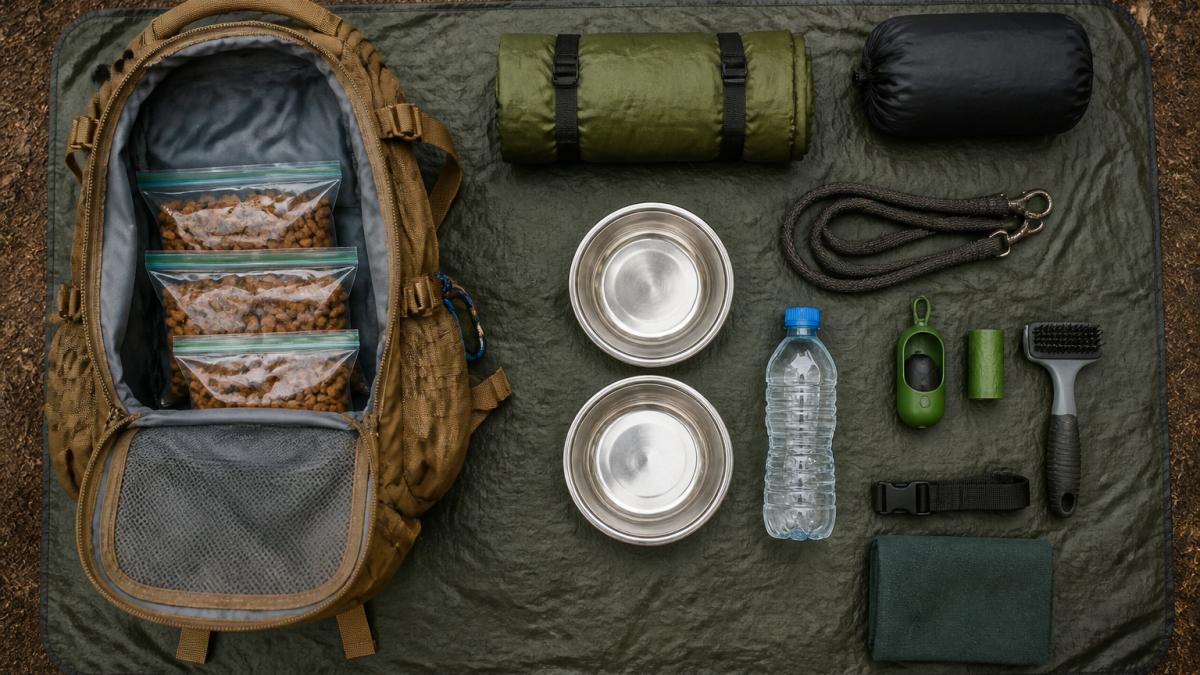
Resealable sandwich-sized or small freezer bags are ideal for portioning kibble. They're lightweight, compact, and easy to label with a permanent marker, write the date and meal number on each.
For freeze-dried or dehydrated food, use resealable bags too, squeezing out excess air before sealing to save pack space.
Avoid single-use plastic bags that don't reseal, they tear easily and spill food inside your pack. Invest in quality resealable bags you can reuse.
Dog Food Storage Containers for Camping
How you store food at camp affects freshness, prevents spills, and keeps wildlife away from your supplies.
Waterproof and Resealable Storage Options
Airtight containers with waterproof seals keep food fresh and protected from moisture. Hard plastic containers with locking lids resist crushing if your pack shifts and keep food dry near water or in humid conditions.
For lighter weight, use resealable freezer bags inside a waterproof stuff sack, a fabric bag that compresses and seals tightly, standard gear for backcountry camping.
For the water bowls your dog eats from, bring collapsible bowls that fold flat when empty. The Double Stainless Steel Pet Bowl Set from Paws N Whiskers Co. works well for car camping where weight is less critical, but for backpacking, lightweight collapsible options are more practical.

Protecting Food from Moisture and Wildlife
Store all food in sealed containers, never loose in your pack. Rain, morning dew, or humidity can spoil kibble and make it unappetizing to your dog.
Keep food away from your sleeping area, at least 100 feet downwind from your tent if possible, to avoid attracting bears, raccoons, or other wildlife. Many campgrounds have specific food storage rules, so check local regulations before your trip.
If you're camping in bear country, use a bear canister or hang your food from a tree branch using a rope and pulley system. These methods keep food inaccessible to bears and other large wildlife. Never leave food unattended at your campsite, even for short periods.
How to Store Dog Food While Camping
Once you're at camp, proper storage keeps food fresh and your dog healthy throughout the trip.
Keeping Food Fresh at Your Campsite
Open only one daily portion at a time and keep the rest sealed. This prevents exposure to air, moisture, and insects that degrade food quality.
In hot weather, store food in the shade or an insulated bag with cooler gel packs, which add minimal weight. High temperatures can cause kibble to lose nutritional value and palatability.
New Pet Dog Picnic Travel Mat Waterproof Foldable Portable Bed Blankets Outdoor →
In cold weather, food stays fresh naturally. Store it in a cool, shaded spot away from direct sun. Freezing temperatures don't harm kibble, so winter camping simplifies food storage.
Wildlife-Safe Food Storage Rules
Never leave food unattended at your campsite, and always supervise mealtimes. If your dog doesn't finish within 10 to 15 minutes, remove the uneaten food and store it in a sealed container.
Don't bury food scraps or bones. This attracts wildlife and creates problems for future campers. Pack out all food waste, including uneaten kibble, in sealed bags. Leave no trace applies to your dog's meals too.
In designated campgrounds, use bear-proof lockers or food storage boxes if provided. In backcountry areas without facilities, follow the bear canister or hanging food method. Check your camping area's specific regulations, some areas have strict rules about food storage distance from campsites.
Step-by-Step Packing Workflow for Dog Food
Understanding how to pack dog food for camping trips through a structured packing process ensures you don't forget anything and that your dog's food stays organized throughout your trip.
Before You Leave Home
Start by calculating your dog's daily calorie needs based on trip length and activity level.
Next, choose your food type. For trips under five days, standard high-calorie kibble works well. For longer trips, consider freeze-dried or dehydrated options to reduce weight.
Portion out each day's food into labeled resealable bags, writing the date and meal number on each, and stack them in a waterproof container or stuff sack.

Pack a collapsible water bowl, a measuring cup if needed, and extra water containers if you won't have reliable water access at camp.
Create a simple checklist:
- Daily food portions (labeled and sealed)
- Emergency ration (20-30% extra, stored separately)
- Water bowls (collapsible or lightweight)
- Measuring cup (if needed)
- Waterproof storage container or stuff sack
- Ice packs or gel packs (for hot weather)
At the Campsite
Set up a designated feeding area away from your tent. This keeps spills and food scraps contained and reduces wildlife attraction to your sleeping area.
Open one daily portion at a time. Pour kibble into your dog's bowl and add water if using dry kibble that needs rehydration.
Remove uneaten food within 15 minutes and store it immediately in a sealed container. This prevents spoilage and keeps wildlife away.
Wash bowls with a small amount of water and biodegradable soap if you brought it. Rinse thoroughly.
Store all food containers in a bear-proof locker, bear canister, or hanging system before you settle in for the night.
Common Mistakes to Avoid
Don't pack exactly what you think you'll need. The 20 to 30 percent emergency buffer prevents starvation situations if your trip extends unexpectedly.
Don't switch your dog's food right before a trip. Sudden diet changes cause digestive upset on the trail. Transition gradually over 7 to 10 days.
Don't leave food unattended at camp. Even brief absences invite wildlife problems. Always supervise mealtimes and store food immediately after feeding.
Don't forget to pack extra water. Your dog needs water as much as food.
Don't mix old food with new food when replenishing supplies. Use the older portions first to prevent waste and ensure freshness.
| Packing Step | Timing | Key Action |
|---|---|---|
| Calculate daily needs | Before trip | Multiply normal intake by 1.5-2, add 20-30% buffer |
| Choose food type | Before trip | Select kibble, dehydrated, or freeze-dried |
| Portion meals | 1-2 days before | Divide into labeled daily bags, store separately |
| Pack containers | Day before | Place portions in waterproof container or stuff sack |
| Set up at camp | Upon arrival | Designate feeding area away from tent |
| Feed and store | Daily | Supervise meals, store food immediately after |
Managing Diet Transitions and Sensitive Stomachs on the Trail
Some dogs have sensitive digestive systems. Camping introduces new stress, water, and environment changes that can trigger upset stomachs if you're not careful.
If your dog has a sensitive stomach, stick to the food they eat at home.
Bring extra food beyond your emergency buffer if your dog has known sensitivities.
Transition gradually if you're switching to a higher-calorie formula for the trip.
Bring probiotics or digestive enzymes if recommended by your veterinarian.
Ensure your dog has constant access to fresh water. Dehydration worsens digestive issues.
Packing dog food for camping trips requires planning, but the effort pays off with a happy, well-fed companion on the trail.
Frequently Asked Questions
How much dog food should I pack for a camping trip?
Calculate your dog's daily calorie needs based on weight and activity level, then multiply by the number of days. A 50-pound active dog typically needs 1,500-2,000 calories per day. For a three-day trip, pack enough for at least four days to account for emergencies or unexpected delays. High-calorie kibble reduces the total weight and volume you need to carry.
What is the best way to portion dog food for a camping trip?
Pre-portion your dog's daily meals into individual resealable bags before leaving home. Label each bag with the date and meal number. This approach prevents overfeeding, keeps portions fresh, and makes feeding time simple at the campsite. Sandwich-sized bags work well for most dogs, while larger breeds may need gallon-sized bags.
How do you keep dog food fresh while camping?
Store food in waterproof, resealable containers or bags to protect against moisture and humidity. Keep dry kibble in a cool, dry spot away from direct sunlight. Use insulated bags or gel packs if temperatures are warm. At night, store all food in a bear canister or hang it from a tree branch at least 12 feet high and 6 feet from the trunk to prevent wildlife access.
Can you store dog food in zip-top bags while camping?
Yes, resealable bags are an excellent option for camping. They are lightweight, waterproof when sealed properly, and easy to pack. For extra protection, place filled zip-top bags inside a larger waterproof container or stuff sack. This dual-layer approach keeps food dry and protected from wildlife and insects during your multiday backpacking trip.