

How to Choose Orthopedic Pet Beds: A 2026 Guide
Table of Contents
- Why Orthopedic Pet Beds Matter for Your Dog's Health
- Signs Your Dog Needs an Orthopedic Bed
- How to Measure a Dog for a Bed
- Memory Foam vs. Orthopedic Pet Beds: What's the Difference
- Key Features to Look for in Orthopedic Pet Beds
- Orthopedic Pet Beds for Different Budgets and Durability Needs
- Common Mistakes to Avoid When Choosing an Orthopedic Pet Bed
- Frequently Asked Questions
Last Updated: September 28, 2026
Why Orthopedic Pet Beds Matter for Your Dog's Health
Your dog spends roughly one-third of their life sleeping. What they sleep on directly affects their joint health, mobility, and quality of life, especially as they age. The right orthopedic pet bed can transform a dog's comfort and longevity. This guide covers everything you need to know about choosing orthopedic pet beds that actually deliver on their promise.
The difference between a standard dog bed and an orthopedic one comes down to support. Standard beds offer cushioning. Orthopedic pet beds use high-density memory foam and strategic bolstering to distribute weight evenly, reduce pressure on joints, and promote proper spine alignment. For dogs with arthritis, hip dysplasia, or simply aging joints, this distinction matters.

A quality orthopedic bed doesn't just feel better, it prevents future joint problems by supporting proper sleeping posture and keeping dogs off cold floors. The investment in a well-made bed can lead to reduced inflammation and better mobility.
Signs Your Dog Needs an Orthopedic Bed
Your dog needs an orthopedic pet bed if they show any of these indicators: difficulty rising from a lying position, reluctance to climb stairs, visible limping or favoring a leg, excessive licking of joints, or audible stiffness when moving after rest. Senior dogs, typically seven years and older, benefit significantly from orthopedic support, even without diagnosed joint issues.

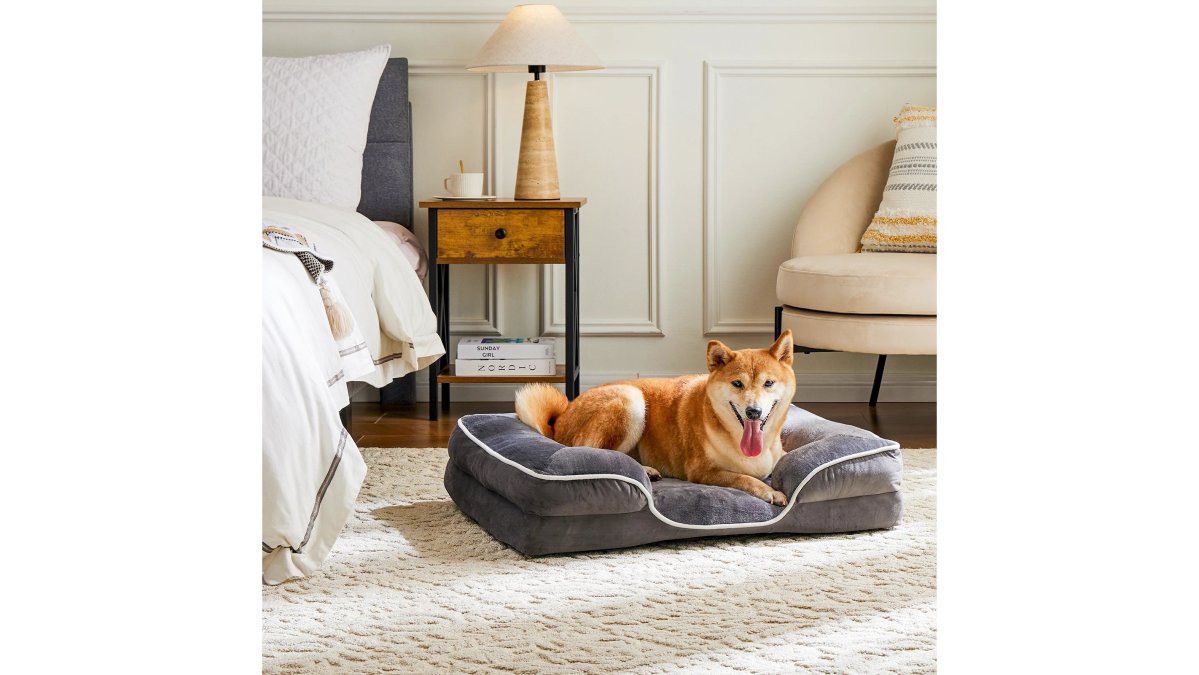
Dogs with specific conditions like arthritis or hip dysplasia require orthopedic beds as part of their care plan. But you don't need a diagnosis to justify the upgrade. If your dog struggles to get comfortable, shifts positions frequently during sleep, or seems stiff in the morning, their current bed isn't providing adequate support.
Weight matters too. Larger dogs experience greater pressure on their joints simply due to mass. A 80-pound dog needs far more supportive foam than a 20-pound dog to achieve the same pressure relief. Orthopedic pet beds account for this with varying foam thicknesses across size categories.
How to Measure a Dog for a Bed
Accurate measurement is the most overlooked step when choosing orthopedic pet beds. An undersized bed forces your dog to curl up or hang off edges, defeating the entire purpose of the orthopedic support. An oversized bed wastes money and may not fit your space.
Measure your dog in their natural sleeping position. Have them lie down on a flat surface and measure from nose to tail tip (not stretched out, their relaxed length). Then measure across their widest point, typically at the shoulders or hips. Add 6-12 inches to both measurements to ensure they can stretch out fully without touching edges.
For reference, most beds are sized as Small (under 30 lbs), Medium (30-60 lbs), Large (60-100 lbs), XL (100-130 lbs), and 2XL (130+ lbs). But measurements beat weight estimates. A lean 90-pound dog and a stocky 90-pound dog have different space needs.
Consider where the bed will live. If it's going in a crate, measure the interior dimensions and choose a bed that fits with 2-3 inches of clearance on all sides. If it's a bedroom or living room bed, account for your available floor space and how the bed's proportions will look in the room.
Memory Foam vs. Orthopedic Pet Beds: What's the Difference
This distinction confuses many shoppers. All quality orthopedic pet beds use memory foam, but not all memory foam beds are orthopedic. The difference lies in foam density, thickness, and the bed's overall structure.

Memory foam alone, especially low-density versions, compresses too easily and offers minimal joint support. Orthopedic pet beds use high-density memory foam (typically 4-6 inches thick) combined with a firm base layer that prevents bottoming out. This two-layer system distributes weight evenly and maintains consistent support throughout the bed's lifespan.
Standard memory foam beds often use 2-3 inches of lower-density foam that sinks under pressure. After months of use, they compress into valleys where your dog's body settles, losing all supportive benefit. Orthopedic pet beds maintain their shape and support for years.
The bolster design also separates orthopedic beds from basic memory foam options. Orthopedic pet beds feature raised edges (bolsters) filled with firm padding that provide head and neck support while maintaining the dog's natural sleeping posture. This prevents the spine misalignment that happens when dogs rest their head on flat surfaces.
Dog Bed Extra Large Orthopedic Pet →
When evaluating beds, look at the foam density specification. High-density foam resists compression and maintains its supportive properties. Check the warranty, orthopedic pet beds typically carry 2-3 year warranties because they're engineered to last.
Key Features to Look for in Orthopedic Pet Beds
Foam Density and Thickness
Foam density is measured in pounds per cubic foot (PCF). Orthopedic pet beds should use foam with 3-5 PCF density, anything lower won't provide adequate support. Thickness matters equally. A quality orthopedic bed has at least 4 inches of memory foam layered over a 2-3 inch firm base, creating 6-8 inches of total support.
Higher density foam costs more but resists compression far longer. Higher density foam costs more but resists compression far longer. For dogs with serious joint issues, the extra investment in high-density foam can be beneficial.
The base layer matters as much as the memory foam. A weak base allows the foam to compress all the way to the floor, eliminating the pressure relief benefit. Look for beds that specify a firm, non-compressing base layer, often called a "supportive base" or "high-density base foam."
Water-Resistant and Removable Covers
Accidents happen. A water-resistant cover protects the foam from urine, spilled water, and other liquids that break down foam and create odor. The best orthopedic pet beds feature a waterproof inner liner beneath the cover fabric, preventing liquid from reaching the foam while still allowing the outer cover to be removable and washable.
Removable covers are essential for long-term bed maintenance. Machine-washable covers let you clean the bed regularly without replacing it. Look for covers made from durable, breathable fabrics like cotton or microfiber that withstand repeated washing. Zippers should be reinforced to handle years of removal and replacement.
A quality cover also affects comfort. Soft, plush fabrics feel better against your dog's skin than rough synthetics. The cover should be breathable.
Bolster Design and Sleeping Positions
Bolsters serve two functions: they provide head and neck support and they contain your dog's body, creating a sense of security. Dogs naturally gravitate toward beds with raised edges because the bolsters make them feel enclosed and protected.
The height and firmness of bolsters matter.
Orthopedic Pet Beds for Different Budgets and Durability Needs
Quality orthopedic pet beds range significantly in price based on foam density, size, and brand. Understanding the durability-to-cost ratio helps you make a smart investment.
| Bed Type | Price Range | Best For | Durability |
|---|---|---|---|
| Budget orthopedic | $40-$80 | Small dogs, mild joint support | 2-3 years |
| Mid-range orthopedic | $50-$100 | Medium to large dogs, moderate support | 3-5 years |
| Premium orthopedic | $85-$140+ | Large dogs, severe joint issues | 5-7 years |
Common Mistakes to Avoid When Choosing an Orthopedic Pet Bed
The most common mistake is choosing size based on your dog's current weight rather than their actual sleeping dimensions. A dog that weighs 70 pounds might need a Large bed, but if they stretch out fully, an XL is correct. Undersized beds force your dog to curl up, negating the orthopedic benefits.
Frequently Asked Questions
Are orthopedic dog beds worth it?
Yes, orthopedic pet beds are worth the investment if your dog shows signs of joint discomfort, arthritis, or is entering their senior years. These beds use high-density memory foam and pressure relief technology to distribute weight evenly and reduce stress on joints. Dogs sleeping on orthopedic beds often show improved mobility and better rest quality. For younger, healthy dogs without joint issues, a standard bed may suffice, but the long-term health benefits of orthopedic support make them a smart choice for most pet owners.
How thick should an orthopedic dog bed be for large breeds?
Large breed dogs typically benefit from orthopedic beds with 4 to 6 inches of foam thickness. This depth provides adequate support for heavier body weight and ensures the foam doesn't compress too quickly under pressure. Thicker foam offers better joint protection and longer durability, as it resists flattening over time. Check the product specifications for foam density (measured in pounds per cubic foot) alongside thickness, higher density foam combined with adequate thickness creates the best pressure relief for large dogs.
What's the difference between memory foam and orthopedic pet beds?
Memory foam conforms to your dog's body shape and returns to its original form when pressure is removed, offering basic comfort and support. Orthopedic beds use specialized high-density foam engineered specifically to provide joint support, pressure relief, and spine alignment. Orthopedic beds often include additional features like bolstered edges and waterproof liners. While memory foam is comfortable, orthopedic beds are designed for dogs with arthritis, hip dysplasia, or mobility issues. Most quality orthopedic beds contain memory foam as part of their support system.
Do orthopedic beds help with arthritis in pets?
Orthopedic beds can significantly help dogs with arthritis by reducing pressure on painful joints and promoting better sleep quality. The high-density foam distributes weight evenly across the bed's surface, minimizing stress on arthritic joints and the spine. Many dogs with arthritis show improved mobility and reduced stiffness after sleeping on orthopedic beds. While a bed alone cannot cure arthritis, it's an effective complementary tool alongside veterinary care. Combine an orthopedic bed with proper placement (away from cold floors) and regular exercise for best results.